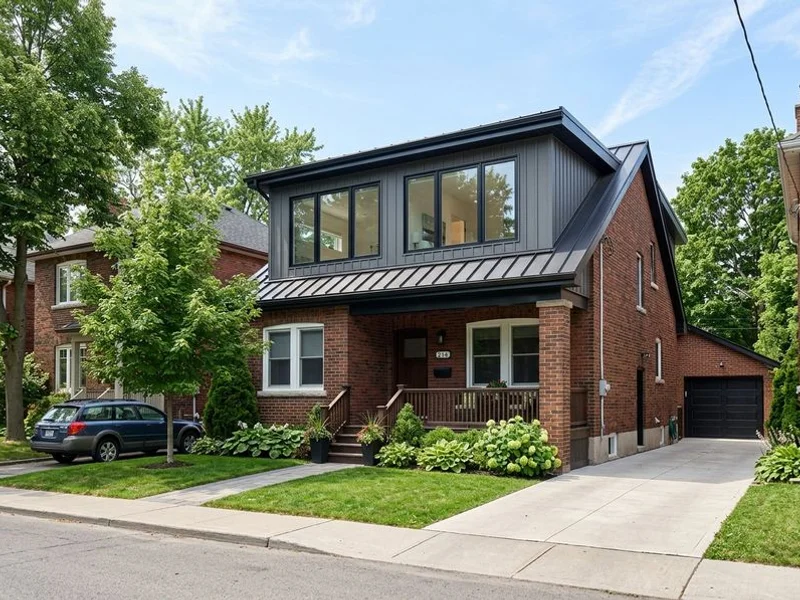
What Is an Exterior Renovation?
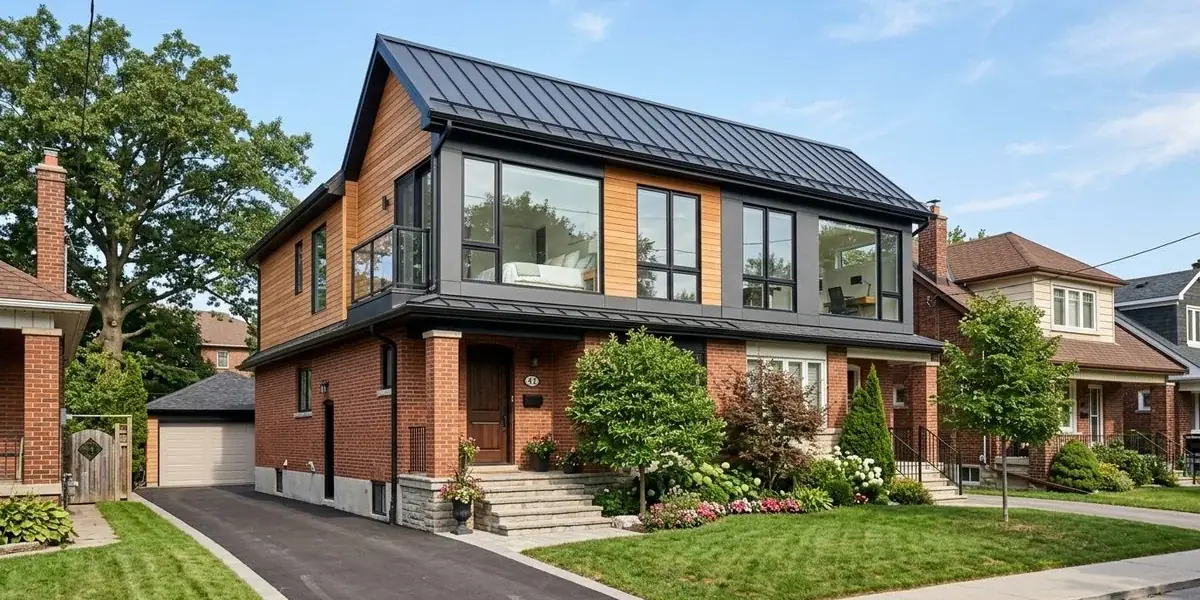
As a design-build renovation firm, we handle everything on the outside of your home - the siding, the roof, the windows and doors, the soffit and fascia, and the exterior painting. These are the systems that protect your home from Toronto’s weather, determine your energy bills, and set the first impression your house makes on the street.
A proper exterior renovation is more than a cosmetic update. It involves structural elements, mechanical systems like ventilation and waterproofing, and regulatory requirements like Toronto building code compliance and energy efficiency standards. We handle all of it - from the site assessment through the final walkthrough - with one dedicated project manager and one fixed price.
What’s Included
An exterior renovation with us covers siding replacement in vinyl, fiber cement, or engineered wood; full roofing replacement with architectural shingles, metal roofing, or flat roof systems; window and door upgrades meeting Toronto Energy Statement and ENERGY STAR requirements; soffit and fascia replacement for proper attic ventilation and moisture management; exterior painting with premium weather-resistant coatings; and full permit preparation, city inspections, and Toronto building code compliance.
Common Exterior Renovation Projects
Siding Replacement
Old, faded, or damaged siding is one of the most visible signs of a home that needs attention. We replace vinyl, aluminum, or aging fiber cement with modern siding products that last, improve insulation, and dramatically change the look of your home. We also handle the building code requirements for proper installation, including house wrap and flashing details that prevent moisture intrusion.
Roofing
A roof replacement is one of the most important investments in your home’s long-term health. We install architectural asphalt shingles, metal roofing systems, and flat roof solutions. The right system depends on your roof pitch, budget, and aesthetic. We advise on the best solution, source the materials, and install with proper ventilation and flashing details that meet Toronto building code.
Windows and Doors
Window and door replacements in Toronto must comply with energy efficiency requirements. We work with manufacturers that offer ENERGY STAR rated products and handle the Toronto Energy Statement documentation that the city requires. New windows and doors reduce heat loss in winter, keep cool air in during summer, and are one of the highest-ROI improvements you can make on a home.
Planning Your Exterior Renovation
We begin with a thorough site assessment of your home’s exterior condition. We identify what needs to be replaced versus what can be repaired, advise on material selection based on your budget and aesthetic goals, and produce a detailed scope and fixed price. Because exterior work is highly dependent on what we find when we open things up, we scope carefully before pricing so the number holds once work begins.
A dedicated project manager oversees every exterior renovation from first assessment through final handover. You have one point of contact, one person who knows the job, and one number to call. That is how an exterior renovation of this scale should be run - on time, on budget, with permits handled and inspections passed.
Exterior Renovation Costs in Toronto
Exterior renovation costs in Toronto vary significantly by scope. A full siding replacement runs $25,000 to $60,000 depending on the material and house size. A full exterior renovation - siding, windows, doors, soffit, fascia, and roofing - on a typical Toronto detached home ranges from $80,000 to $180,000.
| Scope | Typical Cost | Duration | Key Materials |
|---|---|---|---|
| Siding replacement | $25K - $60K | 2 - 4 weeks | Hardie Board, vinyl, engineered wood |
| Window and door replacement | $20K - $50K | 1 - 3 weeks | Jeld-Wen, Pella, Andersen |
| Roofing replacement | $15K - $35K | 3 - 7 days | IKO, GAF, Owens Corning shingles |
| Full exterior renovation | $80K - $180K | 6 - 14 weeks | All of the above |
A building permit is required for structural changes, window enlargements, and additions to the building envelope. Siding and roofing replacements using like-for-like materials typically do not require a permit. We advise on permit requirements during the pre-construction walkthrough.
Siding Options for Toronto’s Climate
Toronto’s climate - cold winters with freeze-thaw cycles, humid summers, and significant wind-driven rain - places specific demands on exterior cladding. The right siding material must manage moisture, resist freeze-thaw damage, and maintain its appearance without excessive maintenance.
Hardie Board fibre cement siding is the most specified material on our exterior renovation projects. James Hardie’s fibre cement products are dimensionally stable in freeze-thaw conditions, non-combustible, and resistant to moisture infiltration. The HardiePlank lap siding profile is the most common residential application. Hardie products carry a 30-year limited warranty and are pre-primed for paint adhesion.
Engineered wood siding such as LP SmartSide offers a wood-grain appearance with better moisture resistance than traditional wood. LP SmartSide carries a 50-year limited warranty and is treated with a zinc borate preservative.
Vinyl siding is the most cost-effective option. Quality vinyl from manufacturers like CertainTeed maintains colour stability and does not require painting, but can crack in extreme cold and has limited impact resistance compared to fibre cement.
We do not specify traditional wood siding on Toronto exterior renovations due to the maintenance demands of the local climate.
Window and Door Replacement
Window replacement is one of the highest-return exterior improvements in Toronto. Energy-efficient triple-pane windows reduce heating costs, improve acoustic performance (a significant benefit on Toronto’s busier residential streets), and eliminate the condensation and drafts common in original single or double-pane windows.
Jeld-Wen and Pella are the window brands we specify most frequently. Both offer ENERGY STAR-certified triple-pane options with low-E coatings and argon fill. Jeld-Wen’s W-4500 series and Pella’s 350 series are appropriate for most Toronto residential applications. We source windows through trade accounts, delivering better lead times and pricing than retail channels.
Window enlargements - increasing the rough opening size to add light to a dark room - require a building permit if structural changes to the wall framing are involved. We manage the permit and structural assessment as part of the window scope.
Entry door replacement improves both security and energy performance. We specify doors with a minimum R-5 insulated core and multi-point locking systems. For front entries, we work with the homeowner on style selection to complement the architectural character of the home.
Roofing in Toronto
Toronto’s roofing season runs March through November. Asphalt shingles are the predominant roofing material on Toronto residential properties. We specify IKO and GAF architectural (laminate) shingles on most projects - both carry 30-year manufacturer warranties and meet or exceed Ontario Building Code wind resistance requirements.
The typical Toronto roof replacement includes: removal of existing shingles to the deck, inspection and replacement of damaged decking, installation of a self-adhering ice and water shield in the first 1.8m from the eaves and in valleys, synthetic felt underlayment over the remainder, new drip edge, and new shingles.
Flat roof sections - common on Toronto additions, garages, and modified Queen Anne or Victorian rooflines - require different systems. We specify TPO membrane or modified bitumen for flat sections, both of which carry 20 to 25-year warranties when installed correctly.
Heritage Property Considerations
Approximately 7,000 properties in Toronto are listed or designated under the Ontario Heritage Act. Properties with heritage status or located within a Heritage Conservation District face additional restrictions on exterior alterations. Changes to the primary facade, roof profile, window openings, and cladding may require approval from Toronto’s Heritage Preservation Services before a building permit is issued.
We identify heritage status during the pre-construction review and advise on what requires heritage approval. For designated properties, we specify materials that meet the City of Toronto’s heritage standards - typically materials that match the original in profile, texture, and colour rather than modern substitutes.
Soffit, Fascia, and Gutter Systems
Soffit and fascia are the finishing and ventilation components at the roofline. Fascia boards cap the rafter tails and support the gutters. Soffits span the underside of the eave overhang and - when vented - allow outside air to enter the attic, which is critical for attic temperature control and moisture management year-round.
We replace soffit and fascia with pre-finished aluminum profiles in most exterior renovation scopes. Aluminum does not rot, does not need painting, and withstands Toronto’s weather without warping. For heritage properties where wood trim must match the original profile, we specify primed finger-jointed pine or cedar, painted to match the original colour.
Vented soffits are specified on every project where attic ventilation is part of the scope. Continuous ridge vents paired with continuous soffit venting create a balanced air exchange that reduces ice dam formation in winter and attic heat build-up in summer - both common causes of accelerated shingle wear on Toronto residential roofs.
Seamless aluminum gutters are the standard for Toronto residential exteriors. Sectional gutters develop leaks at every joint over time; seamless gutters fabricated on-site have no joints except at corners and downspout outlets. We size gutters to the roof area and local rainfall intensity data and specify downspout extensions to discharge water at least 1.8 metres from the foundation.
Landscaping, Driveways, and Exterior Stonework
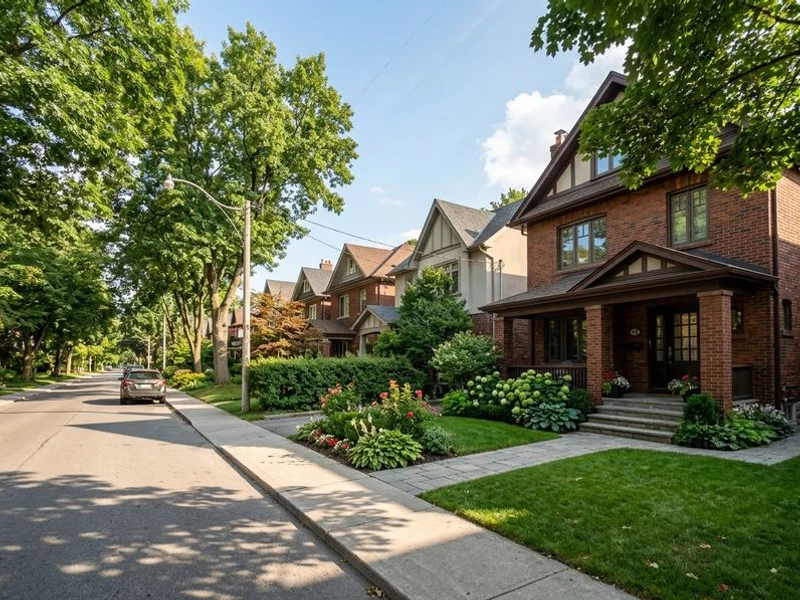
Curb appeal is the sum of every element visible from the street - and the hard landscaping often matters as much as the building itself. Cracked concrete driveways, heaved interlock, and deteriorating retaining walls reduce the impression a renovated building makes before a buyer or tenant even steps through the door.
Interlocking stone driveways are the most requested hardscape upgrade in our exterior renovation scope. Concrete pavers in limestone, granite, or concrete are set over a compacted granular base with polymeric sand joints. Properly installed interlocking driveways flex through freeze-thaw cycles without cracking - unlike poured concrete, which fractures predictably within a few Toronto winters. We install compacted granular sub-base to 300mm depth, edge restraints, and compacted sand bedding to the manufacturer’s specification.
Retaining walls manage elevation changes in the front and rear yard. Stone veneer over concrete block or natural limestone retaining walls handle the soil pressure common on sloped Toronto lots. We integrate drainage aggregate and weeping tile behind every wall to relieve hydrostatic pressure, which is the primary cause of retaining wall failure in this climate. Material selection - granite, limestone, or concrete block with a natural stone face - is matched to the home’s architectural character.
Flagstone and paver walkways from the street to the front entry are part of a complete exterior renovation scope. Material specifications should consider freeze-thaw performance: certain limestones and sandstones spall under repeated cycling, while granite and concrete pavers hold well. Joint width and polymeric sand depth affect long-term stability more than most homeowners expect.
Landscape lighting extends curb appeal into evening hours and improves property security. Low-voltage LED systems with weatherproof ground fixtures along pathways and uplights at architectural features are installed as part of the exterior scope where requested. We coordinate the low-voltage wiring with the electrical rough-in to avoid trenching after the hardscape is set.
What Drives Exterior Renovation Costs in Toronto
Four factors consistently determine where an exterior project lands in its cost range: property size, material specification, structural conditions, and municipal requirements.
Property size is the clearest driver. A 2,000 sq ft Toronto detached home has roughly 1,600 sq ft of exterior wall area after window and door deductions. At Hardie Board pricing of $10 to $15 per installed sq ft, siding alone runs $16,000 to $24,000 before soffit, fascia, and painting.
Material specification shifts the total significantly. Vinyl siding at $6 to $10 per sq ft versus fibre cement at $10 to $15 per sq ft is a meaningful cost difference across a full exterior. Window specification - double-pane standard versus triple-pane ENERGY STAR - affects both material and installation cost per opening.
Structural conditions add cost when discovered during demolition: rotted sheathing behind old siding, damaged decking under existing shingles, or deteriorated window rough openings that require rebuilding before new units can be installed. Our pre-construction walkthrough documents visible conditions, and we build a contingency into the scope for conditions that are concealed until demolition.
Heritage designation adds cost through longer permit timelines, materials specified to match the original building, and the heritage approval process through Toronto’s Heritage Preservation Services. Heritage projects require more design documentation and typically run 20 to 30% higher than equivalent work on non-designated properties.
Exterior Renovation Timeline
| Phase | Typical Duration |
|---|---|
| Site assessment and scope definition | 1 - 2 weeks |
| Permit application and approval | 2 - 6 weeks (heritage adds 4 - 8 weeks) |
| Siding replacement | 2 - 4 weeks |
| Roofing replacement | 3 - 7 days |
| Window and door installation | 1 - 3 weeks |
| Soffit, fascia, and gutters | 3 - 7 days |
| Exterior painting | 1 - 2 weeks |
| Full exterior renovation (all scopes) | 6 - 14 weeks on site |
Weather is the variable most likely to affect exterior renovation timelines. We build weather contingency into every exterior schedule and do not paint or apply caulking below 5 degrees Celsius. Roofing is paused in active precipitation. We communicate schedule impacts promptly and update the written timeline weekly throughout the project.
Serving the GTA
We execute exterior renovations across the City of Toronto - East York, North York, Etobicoke, Scarborough, and the downtown core - and throughout the broader GTA including Mississauga, Brampton, Vaughan, Markham, Richmond Hill, and Oakville.
Heritage-designated properties are concentrated in the older neighbourhoods of Toronto proper: Cabbagetown, Roncesvalles, the Annex, Leslieville, and Riverdale. We are familiar with the documentation requirements of Toronto Heritage Preservation Services and manage the heritage approval process as part of the standard project scope for designated properties.
Newer suburban housing stock in Mississauga, Vaughan, and Markham typically presents cleaner scope conditions: no heritage complications, standard lot coverage and setback rules, and building codes consistent with current Ontario Building Code requirements.
Exterior Painting and Final Finishes
Exterior painting is the last scope item on most exterior renovation projects and has an outsized impact on the finished result. A fresh exterior paint job unifies new siding, trim, windows, and doors into a cohesive appearance - and protects the underlying cladding from UV degradation and moisture infiltration.
We specify premium exterior coatings rated for Toronto’s climate: Benjamin Moore Aura Exterior, Sherwin-Williams Emerald Exterior, or equivalent products with a minimum 10-year fade and moisture resistance warranty. Application requires surfaces to be clean, dry, and above 10 degrees Celsius - conditions we build into the schedule and monitor daily.
Surface preparation is the work that determines paint longevity. On fibre cement siding, this means sanding any damage to the factory primer, spot-priming bare areas, and applying a full coat of premium primer before topcoating. On existing wood surfaces, this means scraping, sanding, and applying stain-blocking primer over any tannin-bleed zones. Paint applied over inadequate surface preparation fails within two to three years regardless of product quality.
Trim colours, accent colours, and door colours are confirmed in the finish schedule before any painting begins. We prepare colour presentation boards showing the primary body colour, trim, and accent colours for homeowner approval before any materials are ordered. This step ensures colour choices are confirmed against the actual house proportions, street context, and neighbourhood character before paint or cladding is purchased.