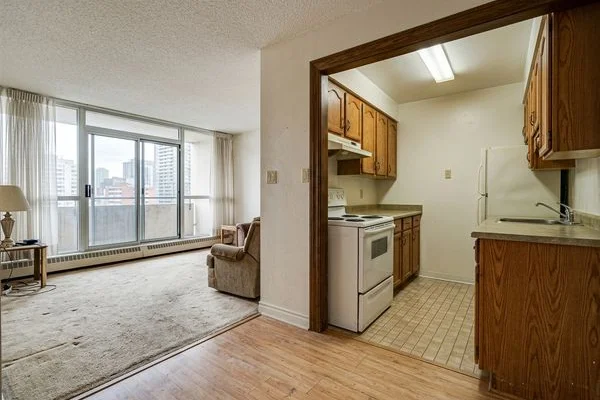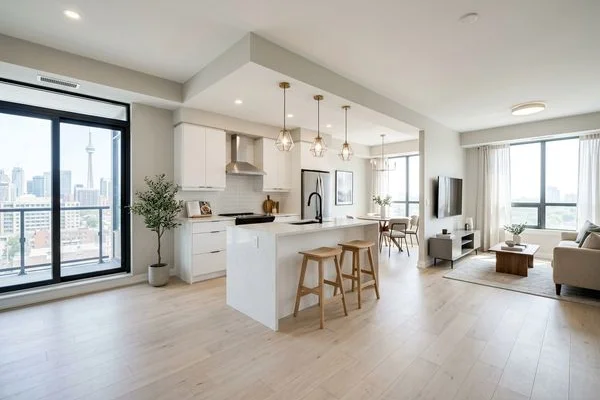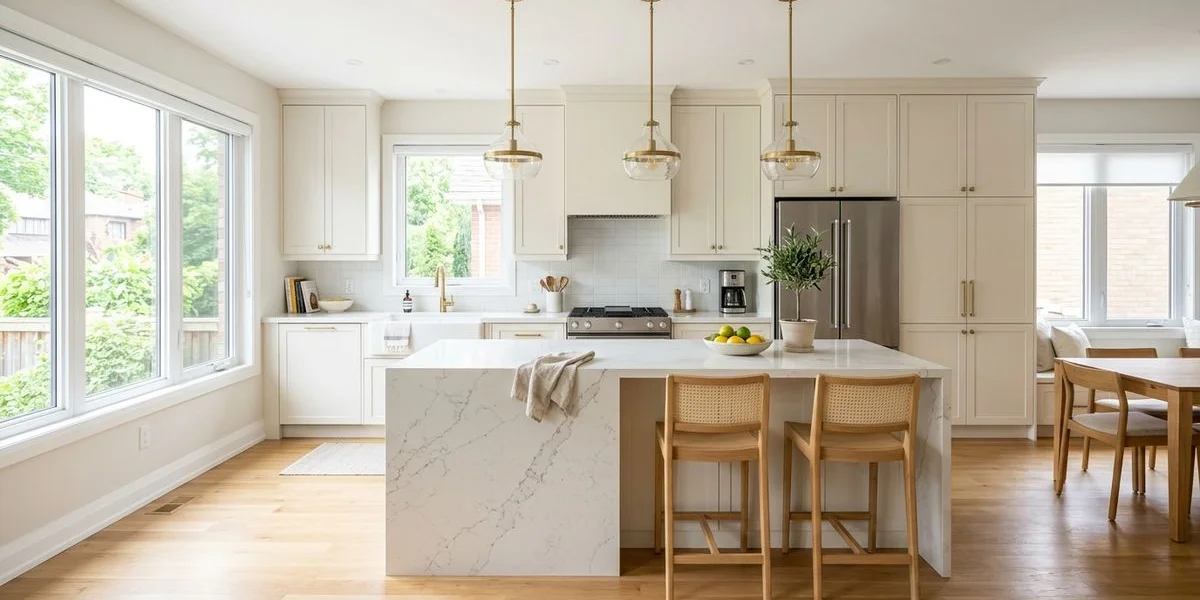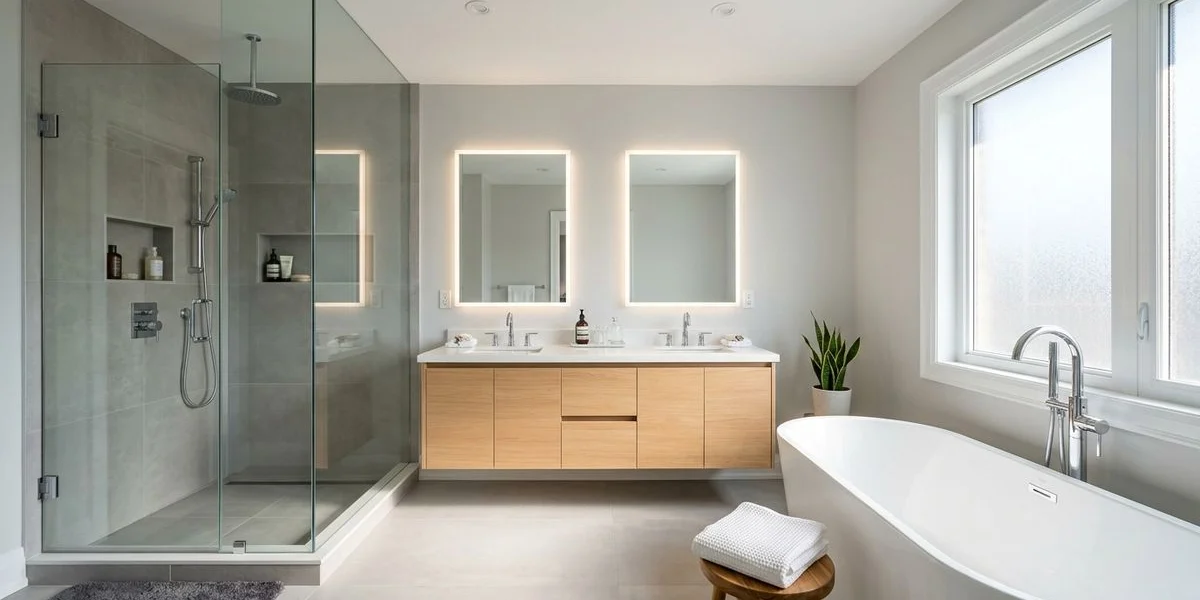
What Is a Design-Build Condo Renovation?
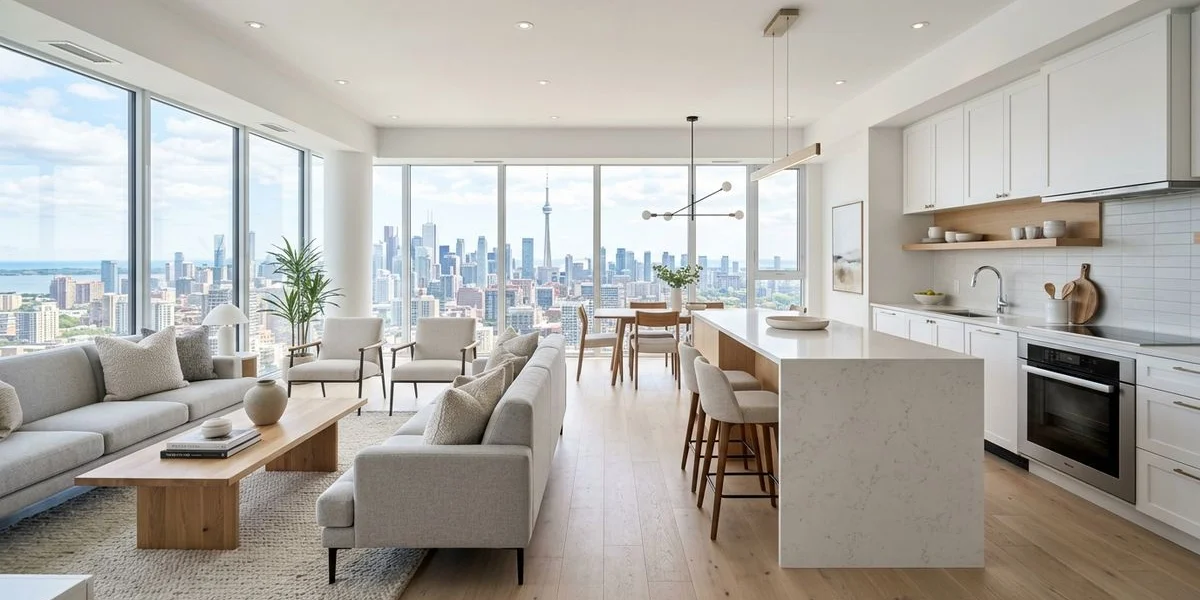
A condo renovation modernizes your unit from the inside out - the kitchen, the bathrooms, the flooring, the layout - while working within the rules of the building you live in. As a design-build renovation firm, we handle the design, the board approvals, the logistics, and the construction under one accountable team, on one fixed price.
Renovating a condo is not the same as renovating a house. There is a condo board to satisfy, a property manager to coordinate with, service elevators to book, restricted work hours to respect, and acoustic and fire-rating requirements to meet. These are the details that derail less-organized contractors and frustrate owners. We handle every one of them for you.
The result is a fully modernized unit, delivered with one point of contact from approval through final inspection, and a fixed price that holds despite the extra complexity a condo build involves.
What’s Included
Our condo renovations cover design, condo board plan submissions and approvals, elevator and logistics coordination, demolition, permitted layout changes, kitchen and bathroom modernization, flooring, acoustic soundproofing, fire-rated entry doors, finishes, and final clean-up.
Common Condo Renovation Problems We Solve
Board Rules and Approvals
Most owners do not know where to start with their condo board’s renovation requirements. We prepare the submissions, coordinate with management, and manage the approval process so the paperwork never stalls your project.
Building Logistics
Booking the service elevator, scheduling deliveries, removing debris, and working within restricted hours can overwhelm a renovation. We treat logistics as part of the job, planned in advance, so the build runs smoothly.
Structural Limits
Condo slabs and shear walls cannot be touched, and plumbing relocation is often limited. We identify these constraints during design, so the layout we plan is one the building will actually permit.
Noise and Neighbour Relations
Flooring changes usually trigger acoustic requirements, and an inconsiderate crew sours relations with neighbours. We install compliant soundproofing and run clean, respectful builds that keep you on good terms with the building.
Planning Your Condo Renovation
We start by designing your unit and reviewing the building’s renovation rules and structural restrictions together. Once the design is set, we secure board approval, lock in the fixed price, and coordinate the elevator and scheduling logistics. By the time construction begins, every rule and restriction has already been accounted for.
Condo Renovation Costs in Toronto
Condo renovations in Toronto range from $25,000 for a kitchen or bathroom refresh to $120,000 or more for a full unit gut renovation. Costs are driven by the same factors as house renovations - scope, finishes, and structural complexity - with the added layer of condo corporation rules that affect what can and cannot be done.
| Project Type | Typical Cost | Duration | Key Constraints |
|---|---|---|---|
| Kitchen or bathroom refresh | $25K - $50K | 3 - 6 weeks | Renovation agreement, elevator booking |
| Full unit renovation | $60K - $100K | 2 - 4 months | Board approval, acoustic compliance |
| Complete gut and reconfigure | $100K - $150K+ | 3 - 5 months | Core drilling approval, plumbing shut-off coordination |
Every condo renovation requires a renovation agreement signed by the condo corporation before work begins. We prepare and submit the renovation agreement package on behalf of the unit owner.
Condo Board Rules and Approvals
Condo corporations govern renovation work through their declaration, bylaws, and rules. Before any work begins, unit owners must submit a renovation agreement that typically includes: a scope of work description, contractor insurance certificates ($2M liability minimum and WSIB clearance), a construction schedule, and a damage deposit.
Elevator booking logistics are a consistent constraint on condo renovation timelines. Most Toronto condo buildings allow elevator reservations for materials and equipment during specific windows - often weekday mornings only, sometimes with a maximum of 2 to 3 hours per booking. We coordinate elevator bookings as part of the project schedule and sequence material deliveries accordingly.
Noise restrictions vary by building but most Toronto condos prohibit construction noise outside of weekday business hours (typically 8am to 5pm) and prohibit work on weekends and holidays. This extends renovation timelines compared to house projects of the same scope.
Structural Concrete Slabs: What You Can and Cannot Change
Condo buildings in Toronto are typically constructed with structural concrete slabs between floors. This affects almost every renovation decision:
Flooring: You cannot nail down solid hardwood flooring into a concrete slab. Engineered hardwood with a floating installation, LVP (luxury vinyl plank), or glue-down engineered wood are the compliant options. Most condo corporations also require a minimum IIC rating (Impact Insulation Class) of 55 or higher for flooring assemblies to limit impact noise transmission to the unit below.
Acoustic soundproofing membranes such as Schluter-DITRA-HEAT, Roberts 70-193, or Proflex 90 are installed between the concrete slab and the finished flooring. These membranes provide the IIC performance required by most condo declarations.
Plumbing: Drain lines and supply lines in a concrete slab cannot be relocated without core drilling through the slab - a process that requires condo corporation approval, a structural engineer’s sign-off on the drilling location, and coordination with the units below. We manage the core drilling approval process as part of our scope. Most condo corporations prohibit drain relocations that require slab penetration except in cases of full unit renovation with board consent.
Fire-Rated Entry Doors and Unit Separation
The entry door of a Toronto condo unit is typically part of the building’s fire separation system and is subject to condo corporation control. Fire-rated entry doors in high-rise buildings must maintain their fire rating - replacing or modifying the unit entry door requires board approval and must use a door assembly with the same or higher fire rating as the original.
Interior walls in a condo unit that are not load-bearing and do not form part of the building’s fire separation can generally be removed or reconfigured with condo corporation consent. We identify which walls are load-bearing or fire-separation walls before any demo scope is finalised.
Plumbing Shut-Offs and Unit Isolation
Before any plumbing work begins in a Toronto condo, the water supply to the unit must be isolated at the unit plumbing shut-off - typically located in a utility closet or above the unit entry corridor ceiling. Some Toronto condo buildings have shared riser shut-offs that affect multiple units simultaneously, requiring coordination with building management and advance notice to affected units.
We coordinate all plumbing shut-off scheduling with building management, notify affected units as required by the condo corporation, and complete plumbing work within the approved shut-off window to minimise disruption.
Soundproofing Standards and Acoustic Compliance
Toronto condo boards commonly require acoustic underlayment systems that meet a minimum IIC (Impact Insulation Class) rating of 60 or higher when replacing hard-surface flooring. Acoustic membranes reduce footfall noise transmission between units - a critical concern in concrete slab construction where sound transfers efficiently through the structure without treatment.
Common specifications by underlayment type:
| Underlay Thickness | Typical IIC Rating | Compatible Floor Types |
|---|---|---|
| 3 - 5 mm | 55 - 60 | Vinyl plank, laminate |
| 6 - 8 mm | 60 - 70 | Engineered hardwood |
| 10 mm+ | 70+ | Floating floor systems |
Acoustic caulking and perimeter isolation strips seal the assembly at walls and thresholds, eliminating flanking sound paths that bypass the membrane entirely. We provide the acoustic test documentation your property manager requires for flooring approval.
Under Toronto’s Municipal Code Chapter 591 and supplementary building house rules, construction noise is restricted to weekday business hours. Many boards also prohibit installation of hard-surface flooring without certified underlayment and verified IIC test data. We obtain written confirmation of your building’s specific IIC requirement before specifying any underlayment product.
When You Need a City of Toronto Building Permit
A city building permit is required whenever a condo renovation alters structural elements, plumbing, or electrical systems. Specific triggers include: core drilling through structural concrete slabs, relocating drains or supply lines, adding new electrical circuits, or modifying ventilation ducting.
Cosmetic work - painting, cabinetry replacement, flooring changes - does not require a municipal building permit but still requires condo board approval through the renovation agreement process.
Permit applications require architectural or BCIN-qualified drawings, a scope of work summary, and in many cases a structural engineering report when modifying load-bearing elements. We prepare and file all permit documentation, coordinate with city inspectors at each required stage, and close the permit upon project completion. Closing the permit is a step many renovators overlook - but it is essential for title insurance compliance, future resale, and home insurance coverage in Ontario.
Insurance, WSIB, and Contractor Compliance
Condo boards require proof of full commercial general liability insurance before granting access for renovation work. Most Toronto buildings set a $2,000,000 minimum liability threshold. We maintain multi-million-dollar general liability coverage and provide project-specific insurance documentation as part of every board approval submission.
WSIB clearance is equally mandatory. Every contractor working in an Ontario condominium must hold an active Workplace Safety and Insurance Board clearance certificate, confirming all workers are registered and covered in the event of a workplace injury. We renew and verify clearance certificates quarterly.
| Coverage Type | Purpose | Threshold |
|---|---|---|
| Commercial General Liability | Property damage and injury | $2,000,000+ |
| WSIB Clearance | Worker injury coverage | Ontario-mandated |
| Tools and Equipment | Jobsite asset protection | Variable |
One project manager oversees all in-house trades from demolition to final walkthrough - no unverified subcontractors on site. This accountability structure satisfies most condo corporations’ risk management requirements and ensures every trade on your project is properly insured and registered.
What Drives Condo Renovation Costs
Logistics are the hidden cost driver in condo renovations. Elevator booking windows, restricted work hours, mandatory floor protection in corridors, and material handling within building rules can add 10 to 20% to the labour portion of a project compared to a detached home of the same scope.
Structural constraints also shape the budget. Core drilling through slabs for plumbing relocation requires specialised equipment and engineering sign-off. Acoustic membrane requirements add material cost that freehold renovations don’t carry. Fire-separation compliance for entry doors and partition modifications often requires upgraded assemblies.
We account for all condo-specific costs during pre-construction, before the fixed price is locked. There are no allowances or contingency items hidden in the quote. The price confirmed after board approval is the price you pay.
Direct material sourcing from manufacturers including Caesarstone, Kohler, and custom cabinetry suppliers eliminates retail markup, giving clients better control over the cost-to-quality ratio. Our project calendar books three to four months in advance, allowing us to reserve dedicated crews and coordinate building logistics without compressing the schedule.
Condo Renovation Timeline
| Phase | Typical Duration |
|---|---|
| Design and board approval package preparation | 2 - 4 weeks |
| Condo board approval | 1 - 4 weeks depending on board schedule |
| City permit (if required) | 2 - 4 weeks |
| Kitchen or bathroom refresh | 3 - 6 weeks on site |
| Full unit renovation | 2 - 4 months on site |
| Full gut and reconfigure | 3 - 5 months on site |
The approval phase often surprises owners who expect to move quickly. Condo boards meet on a schedule, and emergency approval sessions are rare. We submit complete documentation packages on the first attempt to avoid resubmission delays that push construction start dates.
Construction timelines in condos are extended by restricted work hours. A job that takes three weeks in a detached home may take five weeks in a condo because the effective working day is shorter and elevator access is limited. We account for this from the outset.
Project Delivery Inside a Condominium Building
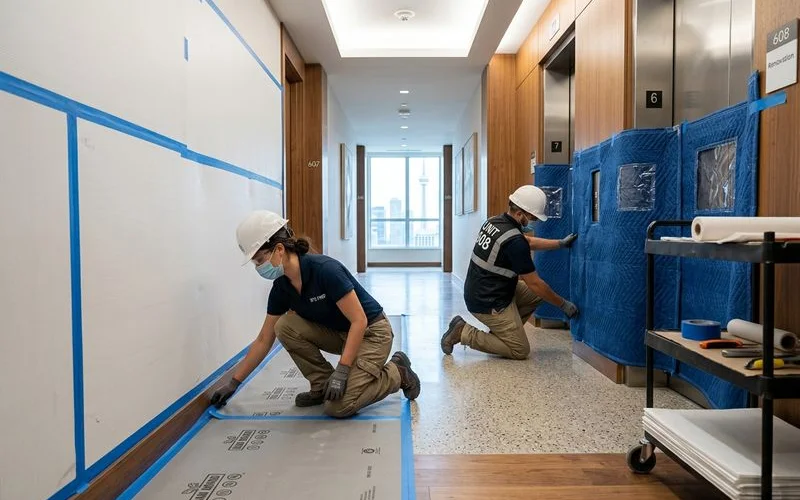
Working within an occupied building requires daily discipline that freehold renovations don’t demand. We protect elevator cabs with pads and plywood before any material movement. Corridor floors are covered from the unit door to the service elevator for the duration of construction. Dust barriers are sealed between the active work zone and any habitable areas of the unit.
Every workday ends with debris removed to the designated disposal area, floors swept, and the corridor restored to base condition. Waste is removed through the service elevator during booked windows only - never through the main lobby or passenger lifts. Larger demolition debris is bagged and staged inside the unit until the next elevator slot.
After construction, we complete a pre-occupancy walkthrough with the owner, submit the post-renovation documentation to property management to initiate the damage deposit return, close any open permits, and deliver the warranty package. The same care we apply to the build itself applies to how we leave the building.
Serving Toronto Condo Owners Across the GTA
Home Renovation Toronto renovates condo units across the full city: the downtown core, Yorkville, King West, Liberty Village, North York, Etobicoke, Scarborough, and the Waterfront. We also serve condo buildings in Mississauga, Vaughan, Markham, and Oakville.
Each building has its own rules. We review the specific condo declaration, renovation agreement requirements, and building house rules before design begins. Buildings in the downtown core typically have the most restrictive elevator booking windows and noise bylaws. Suburban high-rises often have more flexible logistics but may require specific acoustic underlayment products to meet their IIC minimums.
Whatever the building, the process is the same: one team, one fixed price, full compliance from day one.
Condo Renovation by Building Type
Older high-rises (1970s - 1990s): These buildings typically have thinner concrete slabs, older plumbing configurations, and original electrical panels that are often undersized for modern kitchen and bathroom demands. Panel upgrades are a common scope addition in full unit renovations. The acoustic performance of older slab construction is generally lower, meaning board-specified underlayment is even more important to meet current IIC requirements.
Newer glass towers (2000s - present): Modern construction features thicker slabs, pre-wired electrical infrastructure, and more contemporary plumbing layouts. Renovation rules in newer buildings tend to be more formalised, often with specific underlayment brand requirements or approved contractor lists published in the building’s renovation guide. Kitchen and bathroom relocations are less common because units are already designed with layout efficiency in mind.
Mid-rise and boutique condos: Smaller buildings often have more flexible boards and simpler elevator logistics - but the same Ontario Building Code standards and fire-separation requirements apply regardless of building size. Mid-rise buildings built under older OBC editions sometimes have fire-separation assemblies that require review before any adjacent partition work can begin.
We identify the building type, year of construction, and governing documents during the initial feasibility review, and flag any building-specific constraints before design begins. This upfront work prevents the redesign delays that happen when structural or regulatory limits surface mid-project.
Common Areas We Modernise in Toronto Condo Renovations
Kitchen modernisation is the most common condo renovation scope we handle, covering layout reconfiguration, custom cabinetry, quartz countertops, and full appliance integration within the condo’s existing structural and mechanical constraints.